


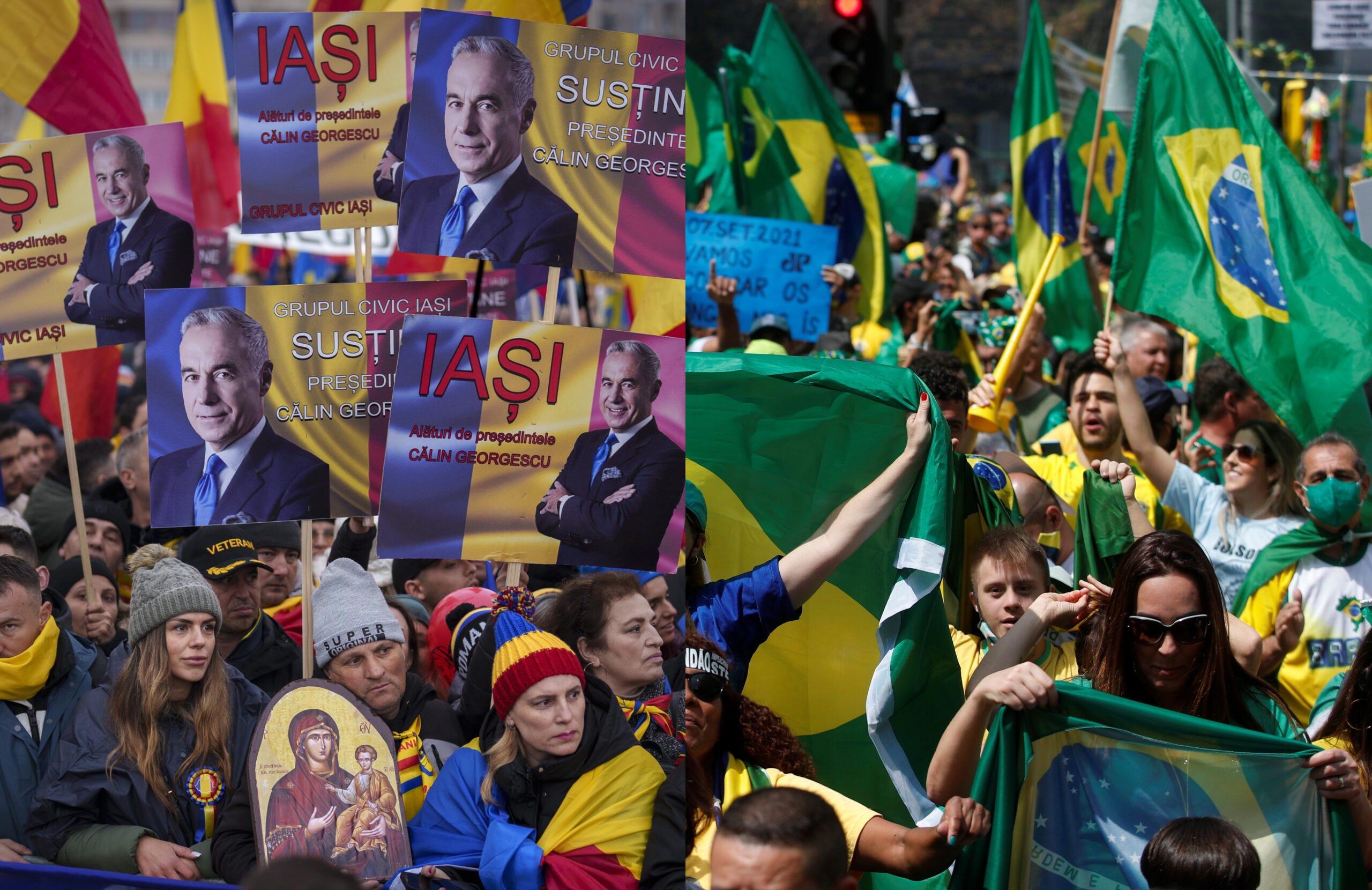
In the days that followed, Romanian intelligence agencies alleged coordinated online activity, cyber operations and possible foreign interference. Declassified reports pointed to methods associated with a state actor and similarities with previous Russian operations, although they did not formally attribute the campaign to Moscow. Romania’s Constitutional Court initially validated the first round. Four days later, after the intelligence documents became public, it annulled the entire election. Georgescu was later barred from running in the replacement election.
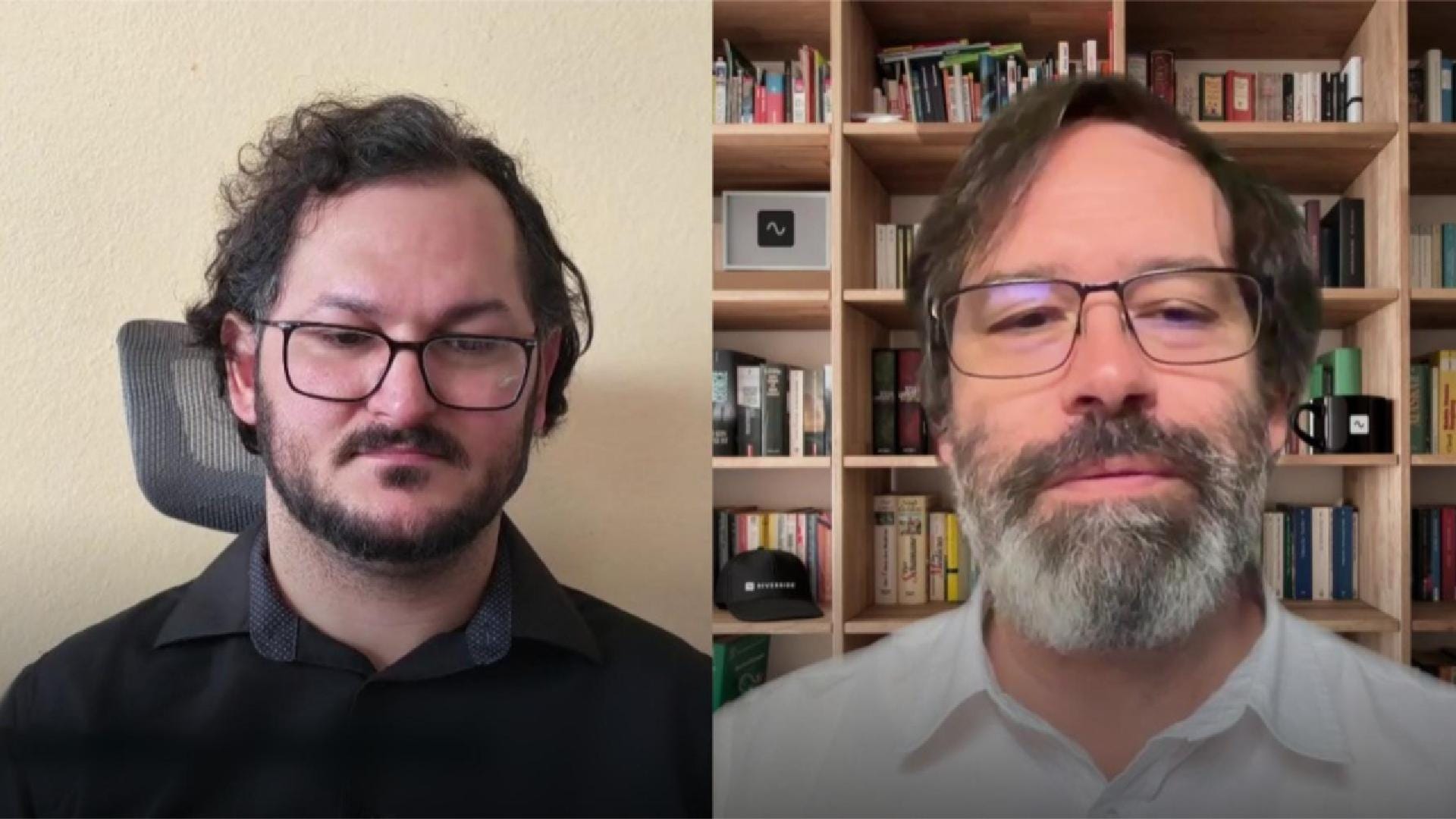
The Romanian case is the starting point of a joint conversation between A Investigação and Francezul about a question that has become increasingly relevant to Brazil in 2026: what evidence should be required before allegations of foreign interference can justify measures that restrict political activity or affect an election?
That question is no longer theoretical in Brazil. In September, Supreme Court Justice Alexandre de Moraes described a Federal Police report involving himself as evidence of a “clear attempt at foreign interference” in the 2026 election, alleging that an outside actor, “probably foreign,” had assisted in producing it. Brazil’s intelligence agency, Abin, separately warned the government and electoral authorities about the risk of U.S. influence, while Lula’s coalition asked both the Supreme Court and the electoral court to investigate alleged foreign support for Flávio Bolsonaro. These allegations have not, by themselves, established a coordinated American operation, but foreign interference has already become part of Brazil’s institutional and electoral debate.
Brazilian investigative journalist David Ágape, founder of A Investigação and co-author of the Twitter Files Brazil, has investigated censorship orders, informal intelligence structures and the expansion of judicial powers over political speech in Brazil.
French journalist Stéphane Luçon, who has lived in Romania for more than two decades, has investigated the European system connecting regulators, digital platforms, fact-checkers and civil-society organizations during elections, including the implementation of the DSA and the Rapid Response System in Romania.
Both took part in the Westminster Free Speech Forum in London, organized by American journalist Michael Shellenberger.
What remains disputed in Romania
Romanian intelligence agencies reported suspicious online behavior, cyberattacks and unusually coordinated promotion around Georgescu’s campaign. Luçon’s objection is not that suspicious activity could not have existed, but that the public evidence did not complete the chain from coordinated digital activity to direct Russian state control — much less establish how much such activity affected the electoral result.
Luçon argues that there was no formal attribution to Moscow and that Romanian authorities still have not publicly demonstrated some of the central links behind the claim. In the interview, he also disputes the portrayal of Georgescu as a completely unknown candidate who suddenly appeared on election night, noting that Georgescu had been present in Romanian politics for years and that online interest in him was already visible before the vote.
Those questions became more important after the election was annulled. A TikTok influencer campaign associated with Georgescu’s online rise was later traced to money from Romania’s National Liberal Party. The company responsible said the campaign had originally been designed for another purpose and may have been copied or diverted in Georgescu’s favor.
The discovery did not settle the broader question of Russian involvement. It did show how difficult it was to separate domestic campaigning, foreign propaganda and coordinated manipulation while institutions were making decisions with immediate electoral consequences.
Another structure was operating at the same time. The Rapid Response System allowed participating organizations and fact-checkers to quickly flag content, accounts and trends to digital platforms during electoral periods. Luçon later reconstructed how the system operated during the Romanian election and questioned the lack of transparency surrounding its participants and decisions.
These organizations could not formally order TikTok or Meta to remove content, but they had access to channels created specifically for rapid intervention. Luçon’s broader investigation into Romania’s moderation architecture also documented the relationships among platforms, regulators, fact-checkers and other participants in the DSA system.
Documents later obtained by the U.S. House Judiciary Committee showed that Romanian organization Funky Citizens had flagged at least 334 TikTok videos during November and December 2024. At least 153 were removed globally for violations of TikTok’s rules, while others were geographically restricted.
One entry listed the reason for a flag as “Political Propaganda for Călin Georgescu.” Luçon later published the record and noted that the flag had been submitted on December 3, while Georgescu was still legally participating in the election.
The wording did not identify a false statement, a fake account or a Russian intelligence operation. It referred to political material supporting a candidate who was still legally participating in the election.
Luçon’s reporting has focused in part on this expansion from fact-checking to the monitoring of political “narratives.” Once narratives themselves become objects of intervention, the boundary between combating false information and regulating political debate becomes harder to define.
Brazil’s system developed differently
During and after the 2022 election, Brazilian courts issued orders requiring platforms to remove content, suspend accounts and provide user information. The Twitter Files Brazil, published by Ágape, Eli Vieira and Michael Shellenberger, revealed internal Twitter discussions about some of those demands. In April 2024, Ágape presented the findings before Brazil’s Senate during a public hearing on interference by Brazilian authorities in social-media platforms.
Later investigations by A Investigação, including the Vaza Toga and January 8 Files, showed that structures originally created to combat electoral disinformation were also used to collect and organize information about people investigated after the January 8, 2023 riots in Brasília. The reporting later expanded to internal communications involving businessmen aligned with Jair Bolsonaro and to a nationwide cross-check of 2,119 CPF numbers from January 8 proceedings.
The institutional arrangements differ considerably. In Romania, responsibility was divided among platforms, regulators, private organizations, intelligence agencies and European institutions. In Brazil, much of the coercive power was exercised directly through the judiciary. What makes the Romanian comparison especially relevant in 2026 is that the Brazilian debate has now moved from censorship and disinformation to foreign interference itself.
In September, Alexandre de Moraes described a Federal Police report concerning himself as part of a “clear attempt at foreign interference” in the 2026 election and said outside actors, “probably foreign,” had helped produce it. During the same crisis inside the Supreme Court, Justice Flávio Dino asked to halt deliberations and warned about the consequences of exposing the court to such a dispute “15 days before an election.”
Brazil’s intelligence agency has gone further. A classified Abin report sent to the presidency, the Electoral Court and the Justice Ministry raised the possibility of U.S. influence or interference to a “criticality level” and warned of escalating American pressure on Brazil.
Lula’s campaign has also taken the allegation into court. The Workers’ Party filed actions before both the Supreme Court and the TSE accusing Flávio and Eduardo Bolsonaro of political, economic and media abuse through alleged coordination with the U.S. government to interfere in the election. The allegations include foreign political support and other forms of external assistance; they remain allegations and have not, by themselves, established a coordinated U.S. electoral operation.
Lula has incorporated the same concern into his campaign rhetoric. At the United Nations on September 22, he said that some candidates “associate themselves with foreign interests contrary to the country” and warned that Brazil would not allow “enemies of democracy, domestic or foreign” to interfere with the popular will.
The U.S. role is not entirely hypothetical. In July 2025, Washington imposed Global Magnitsky sanctions on Supreme Court Justice Alexandre de Moraes, accusing him of arbitrary pre-trial detentions and suppression of freedom of expression. The sanctions were lifted in December. If Washington takes new measures during the 2026 campaign, the foreign action itself will therefore be public and attributable. The harder question will be what Brazilian institutions infer from it.
Brazilian politicians may support those measures. Journalists may publish information later cited by American officials. U.S. politicians and media figures may amplify Brazilian reporting, while Brazilian users circulate the same material online. Those connections can be mapped, but they do not by themselves establish command, financing or coordination by a foreign government.
Why Romania matters to Brazil now
Romania is relevant to Brazil not because the two systems are identical, but because the Romanian case shows how quickly the category of foreign interference can acquire electoral consequences.
In Romania, intelligence reports, suspicious digital networks, foreign-influence allegations and platform monitoring accumulated before the Constitutional Court annulled the vote. Some of the underlying attributions remained disputed afterward, including the origin of particular campaigns and the degree to which Russian activity could be tied directly to the state or to the electoral result.
Brazil is now beginning that debate before its election. Moraes is already speaking of foreign interference; Abin is formally assessing U.S. influence; Lula has made external interference part of his campaign message; and his party has asked the courts to investigate alleged foreign support for the opposition. None of that means Brazil is following the Romanian outcome. It does mean that the same evidentiary questions are no longer hypothetical.
The central issue is attribution. A foreign government may act openly, as the United States did when it sanctioned Moraes. Domestic politicians may welcome that action, journalists may report on it and foreign actors may amplify Brazilian material. Establishing that those people are participants in a foreign electoral operation requires additional evidence: who directed the activity, who knowingly coordinated with whom, how money or instructions moved, and what effect the operation had on the vote.
That was one of Luçon’s main criticisms of the Romanian case. In his view, different phenomena — coordinated political activity, Russian-aligned content, foreign propaganda and state-directed interference — were treated too easily as parts of a single operation before every link had been established.
Brazil still has the opportunity to make those distinctions before they carry electoral consequences. The interview with Luçon is useful precisely because Romania has already gone through the process that Brazil is only beginning to debate: how an allegation of foreign interference moves from intelligence reports and digital networks into institutions with the power to affect an election.


